
Blog · 2026-11-04
What a Fort Hood Anger Study Can Teach All of Us
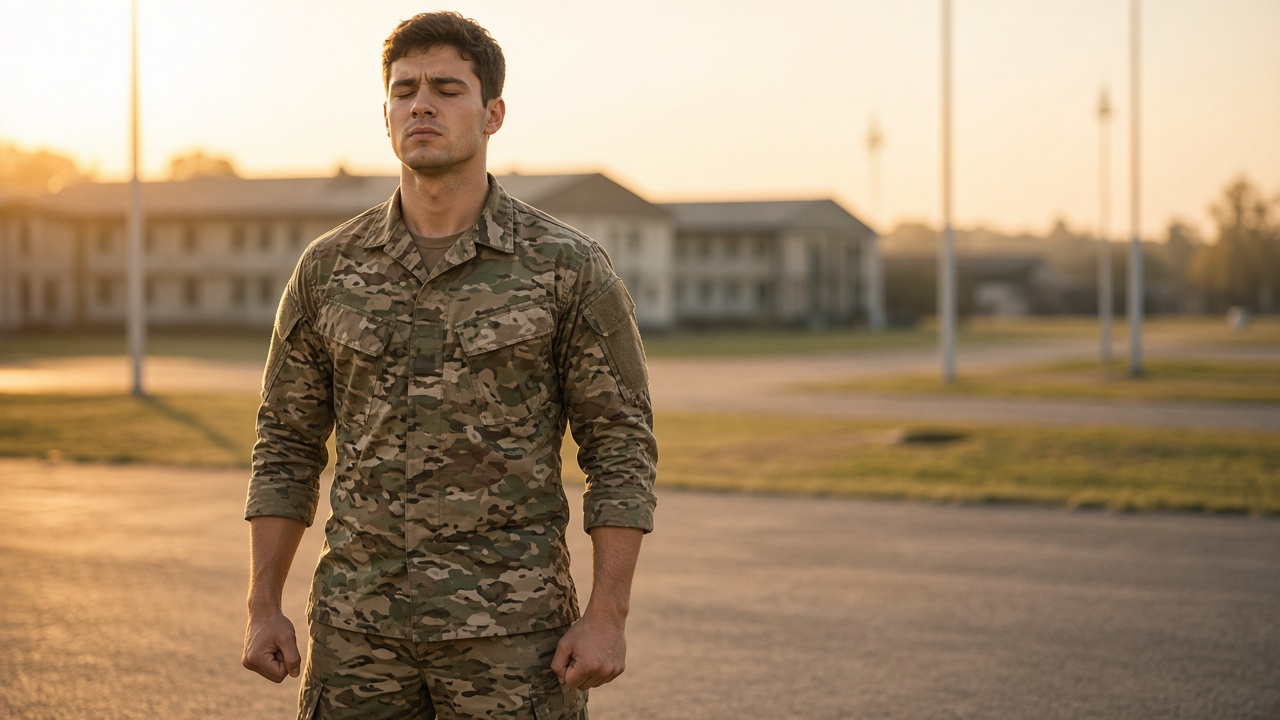
Researchers are testing two short treatments for anger and aggression with soldiers at Fort Hood in Texas. The study is still underway, so there are no results yet. But the tools it uses are simple, practical, and useful for anyone whose temper gets ahead of them.
What is the Fort Hood anger study?
This week, the STRONG STAR Consortium posted on X about a new research study. STRONG STAR is a research group based at UT Health San Antonio. Its study is at Fort Hood in Killeen, Texas. It's open to active duty service members there who struggle with anger and aggression.
The study's page asks three plain questions:
- "Have you had trouble controlling your anger?"
- "Have you acted aggressively and later regretted it?"
- "Do you feel like you could use some help getting your emotions under control?"
If you've ever said yes to any of those, you're in good company. These are some of the most common reasons people come to see me.
What are the two treatments?
The study is testing two approaches.
1. Manage Emotions to Reduce Aggression (MERA). The study page says MERA takes "just a few sessions." It teaches people how to deal with their emotions well. In earlier work with veterans, MERA was three sessions. It covered learning about emotions, skills from cognitive behavioral therapy (CBT), and acceptance-based skills.
2. Self-monitoring with risk management. This means tracking your anger and aggression so you become more aware of it. The study page notes that self-monitoring is an active part of many CBT treatments.
Here's an interesting twist. Everyone in the study gets both treatments. The order is what changes. Some people start with MERA, and some start with self-monitoring. That lets the researchers see whether each one lowers anger and aggression, and whether the gains last.
The study also looks for people with other signs of stress. These include feeling jumpy or on edge, upsetting memories, nightmares or poor sleep, and avoiding things.
What do we know so far?
I want to be careful here, because it's easy to overstate early research.
The Fort Hood study is recruiting. It has no results yet.
It builds on earlier work with veterans. In a small pilot study published in 2020, Shannon Miles and colleagues tried MERA with male combat veterans who had trouble with aggression. Of the 20 veterans who finished MERA and the follow-up check, 95% said it was helpful. As a group, the veterans also reported less frequent aggression and fewer struggles with handling emotions.
That's promising. But a pilot like this has limits. It was small, and there was no comparison group. So we can't yet say MERA caused the change.
A larger VA trial is now testing MERA against another brief therapy with veterans in Tampa and Houston. As of today, it's listed as no longer recruiting, and no results have been posted. The Fort Hood study is the next step: testing MERA with service members who are still on active duty.
So the honest summary is this. MERA "has shown promise," in the study team's words, and the stronger tests are still in progress.
Why a brief treatment matters for military families
Military life is full of strain. There are long hours, deployments, moves, and time away from family. Many service members carry a lot without much room to stop and sort out their feelings.
A long treatment can be hard to fit in. A short one, just a few sessions, may be easier to say yes to. That matters, because help only works if people can actually get it.
Here in Middle Tennessee, a lot of us have neighbors, friends, or family tied to Fort Campbell, just up the road. Military families know this stress up close. And the spouse and kids feel it when anger runs the house.
What this study teaches everyone
You don't have to wear a uniform to learn from this. The two treatments point to two skills almost anyone can start on.
Skill 1: Track your anger. Self-monitoring sounds simple, and it is. But it works on something big. Most people don't notice anger until it's already loud. When you write it down, patterns show up.
Try this for one week. Each time you feel angry, jot down:
- What happened
- How strong the anger was, from 1 to 10
- What you felt in your body
- What you did next
By the end of the week, you'll likely see your triggers, your rough times of day, and your early warning signs.
Skill 2: Manage the emotion, not just the behavior. MERA's name says it well. To reduce aggression, you manage emotions. Anger often sits on top of other feelings, like stress, fear, shame, or feeling disrespected. I wrote about this in What Is Your Anger Covering Up?
In my office, I use mindfulness-based CBT to build this skill. That looks like:
- Noticing anger in your body early, like a tight chest, clenched fists, or heat in your face.
- Pausing before you act. Take a slow breath, step away, or count to ten.
- Checking the story. Ask, "What am I telling myself right now? Is it the whole truth?" My post Is Your Anger a Signal or a Verdict? walks through this check.
- Choosing your next move on purpose instead of on autopilot.
These skills take practice. But they're learnable, and they get easier the more you use them.
A word to service members and veterans
Asking for help with anger is not weakness. It takes the same courage and discipline you already use every day. The fact that researchers are building treatments just for service members shows how common these struggles are.
If you're a service member at Fort Hood, the STRONG STAR study page has contact information if you'd like to learn more. If you're a veteran, the VA is a good place to start. And if you're in Tennessee, I'm glad to help too.
When to get more help
Consider talking with a counselor if:
- Your anger shows up most days or feels bigger than the problem.
- You've done or said things in anger that you later regretted.
- People at home seem to walk on eggshells around you.
- You often feel on edge or have trouble sleeping.
These patterns are common, and they respond well to practice and support.
Ready to take charge of your anger?
You don't have to wait for a study to start learning these skills. If you'd like help tracking your anger and managing what's underneath it, I'd be glad to work with you. I see adults in Franklin, TN, and across Tennessee by telehealth, using mindfulness-based CBT. Service members, veterans, and military spouses are welcome.
This post is for educational purposes only and is not a substitute for counseling, therapy, or medical advice. If you are in crisis, call or text 988. Veterans and service members can press 1 after dialing 988 to reach the Veterans Crisis Line. In an emergency, call 911.
Sources
- STRONG STAR Consortium (@strongstar_ptsd). Post on the Fort Hood anger and aggression study. X, Nov 3, 2026.
- STRONG STAR Consortium, UT Health San Antonio. "Testing Two Brief Treatments for Aggression in Military Personnel." Accessed Nov 4, 2026.
- Miles SR, Kent TA, Stanley M, et al. "Manage Emotions to Reduce Aggression: A Pilot Study of a Brief Treatment to Help Veterans Reduce Impulsive Aggression." Journal of Nervous and Mental Disease 208(11):897–903 (2020). doi:10.1097/NMD.0000000000001229
- ClinicalTrials.gov. "Using Emotion Regulation to Decrease Aggression in Veterans With PTSD" (NCT02724787). Pilot study record, completed.
- ClinicalTrials.gov. "Manage Emotions to Reduce Aggression (MERA)" (NCT04793776). VA randomized trial record. Accessed Nov 4, 2026.
- U.S. Department of Veterans Affairs. Veterans Crisis Line.
Related at Navigate Life Counseling: anger management counseling in Franklin, TN.